
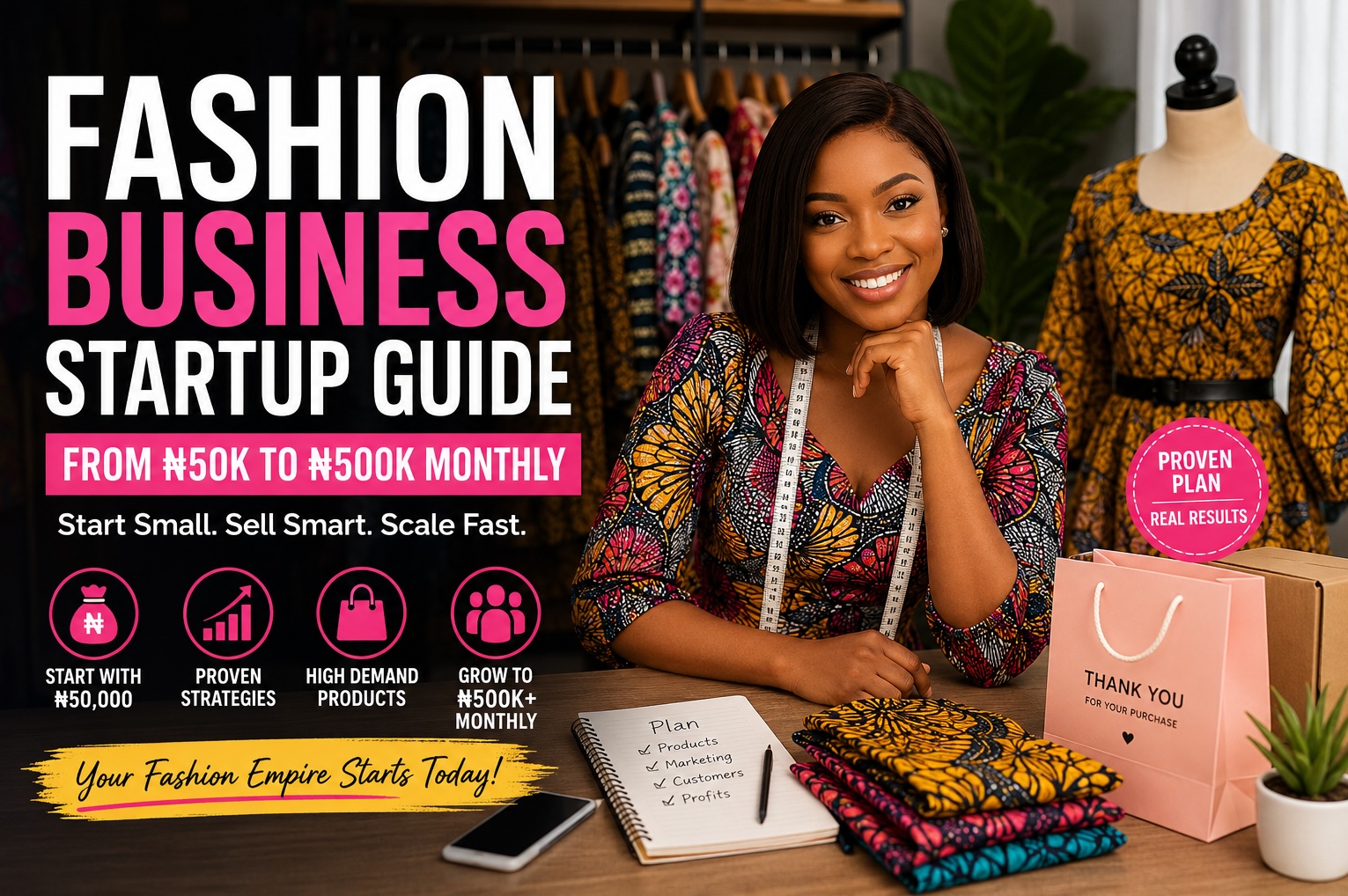
The Nigerian fashion industry is one of Africa's fastest-growing creative sectors, creating opportunities for entrepreneurs in clothing, accessories, tailoring, and online retail. Whether you're looking for a side hustle or planning to build a full-time business, fashion remains one of the easiest businesses to start with relatively small capital.
With the right products, consistent marketing, and smart financial management, it's possible to grow from a small investment into a profitable fashion business over time.
In this guide, you'll learn how to start a fashion business in Nigeria, source products, price them for profit, market effectively, and build a sustainable brand.
Can You Really Start a Fashion Business With ₦50,000?
Yes. While your product options may be limited initially, ₦50,000 is enough to test the market before investing more money.
Sample Startup Budget
| Item | Estimated Cost |
|---|---|
| Initial Inventory (8–10 pieces) | ₦35,000 |
| Packaging Materials | ₦5,000 |
| Phone & Data | ₦3,000 |
| Business Setup (Business Cards, Online Store) | ₦5,000 |
| Transport & Miscellaneous | ₦2,000 |
| Total | ₦50,000 |
Tip: Start with fewer products and reinvest your profits instead of buying large quantities immediately.
Example First-Month Projection
This example assumes you:
Sell 7 out of 10 items
Price each item with an average 100% markup
Keep operating expenses low
| Item | Amount |
|---|---|
| Revenue | ₦56,000 |
| Cost of Goods Sold | ₦28,000 |
| Operating Expenses | ₦5,000 |
| Estimated Profit | ₦23,000 |
Figures are illustrative only. Actual results will vary depending on pricing, demand, competition, and marketing.
Step 1: Choose Your Fashion Business Model
There isn't just one way to build a fashion business. Choose the model that matches your skills and budget.
1. Fashion Reseller (Best for Beginners)
Purchase ready-made clothes and resell them at a profit.
Capital Required: ₦50,000–₦200,000
Advantages
Easy to start
Low risk
No tailoring skills required
Fast inventory turnover
Challenges
Lower profit margins
More competition
Best for: Beginners, students, side hustlers.
2. Fashion Designer
Design and produce your own clothing.
Capital Required: ₦200,000+
Advantages
Higher profit margins
Unique products
Strong customer loyalty
Challenges
Requires design skills
Longer production time
Managing tailors and quality control
Best for: Creative entrepreneurs and professional tailors.
3. Online Fashion Store
Sell entirely online without renting a physical shop.
Capital Required: ₦50,000–₦100,000
Advantages
Low operating costs
Nationwide reach
Flexible working hours
Challenges
Requires consistent online marketing
Delivery logistics must be well managed
Best for: Students, remote entrepreneurs, and anyone with limited startup capital.
4. Physical Boutique
Open a walk-in fashion store.
Capital Required: ₦500,000+
Advantages
Greater brand visibility
Walk-in customers
Higher-value clientele
Challenges
Rent
Utilities
Staff costs
Location significantly affects sales
Best for: Established businesses with sufficient capital.
5. Hybrid Business
Combine online sales with a small showroom or boutique.
Capital Required: ₦150,000–₦300,000
Advantages
More sales channels
Greater customer trust
Flexible business model
Challenges
More operational work
Best for: Businesses ready to expand.
Step 2: Choose Your Fashion Niche
Rather than selling everything, focus on a specific category.
Popular fashion niches include:
Ankara wear
Corporate wear
Women's fashion
Men's native wear
Shoes
Bags
Accessories
Children's clothing
Bridal wear
Plus-size fashion
Businesses that specialise in one niche often build stronger customer loyalty and a clearer brand identity.
Step 3: Where to Source Fashion Products in Nigeria
Balogun Market (Lagos Island)
Ideal for:
Ankara fabrics
Lace
Accessories
Typical prices:
Wholesale: ₦1,200–₦2,500 per yard
Retail: ₦2,000–₦4,000 per yard
Tip: Visit on weekdays for better bargaining opportunities.
Yaba Market
Popular for:
Ready-made clothing
Shoes
Bags
Typical prices:
Dresses: ₦2,500–₦5,000
Corporate wear: ₦3,000–₦8,000
Always inspect products carefully before purchase.
Oshodi Market
Suitable for:
Budget clothing
Bulk purchases
Testing new product categories
Trade Fair Complex (Ojo, Lagos)
Best for:
Imported clothing
Shoes
Fashion accessories
Many wholesalers and importers operate here.
Online Suppliers
You can also source products from:
Jumia Wholesale
Alibaba
AliExpress
Verified Instagram wholesalers
Always verify suppliers before making large payments.
Step 4: Price Your Products Correctly
Never price products based only on the amount you paid.
Instead, calculate your true cost.
Example
| Expense | Amount |
|---|---|
| Purchase Price | ₦4,000 |
| Transportation | ₦200 |
| Packaging | ₦300 |
| Business Overheads | ₦500 |
| Total Cost | ₦5,000 |
Next:
Add your desired profit margin.
Compare with competitors.
Ensure customers still perceive good value.
A pricing strategy should balance profitability with competitiveness.
Step 5: Build an Online Presence
Customers increasingly search online before making purchasing decisions.
Create:
Instagram Business Account
Facebook Page
WhatsApp Business
TikTok Account
Google Business Profile
Professional Online Store
A simple online store allows customers to browse products, place orders, and contact you without waiting for responses to every inquiry.
Marketing Your Fashion Business
Instagram Strategy
Use your profile to showcase products professionally.
Suggested Weekly Content
| Day | Content |
|---|---|
| Monday | New arrivals |
| Tuesday | Styling tips |
| Wednesday | Featured products |
| Thursday | Fashion trends |
| Friday | Promotions |
| Saturday | Customer testimonials |
| Sunday | Behind-the-scenes |
Popular hashtags include:
#NaijaFashion
#AnkaraStyle
#LagosFashion
#NigerianFashion
#ShopNigeria
WhatsApp Marketing
WhatsApp remains one of Nigeria's most effective sales channels.
Use it to:
Post daily status updates
Share new arrivals
Broadcast promotions
Collect customer feedback
Handle customer service
Facebook and TikTok
Facebook Groups can generate steady sales, while TikTok videos help increase visibility through styling videos, outfit transformations, and behind-the-scenes content.
Deliver Excellent Customer Service
Great service creates repeat customers.
Simple ideas include:
Thank-you messages
Fast responses
Delivery updates
Loyalty discounts
Referral rewards
Birthday offers
Following up after delivery
Returning customers are often more profitable than constantly acquiring new ones.
Manage Inventory Carefully
Avoid tying up money in products that don't sell.
Good inventory practices include:
Restock fast-selling products.
Buy smaller quantities of new products first.
Monitor slow-moving items.
Run promotions to clear old stock.
Keep accurate inventory records.
Common Mistakes to Avoid
Avoid these common beginner mistakes:
Buying too much inventory too early
Copying competitors without differentiation
Taking poor-quality product photos
Ignoring customer service
Pricing products too low
Mixing personal and business finances
Failing to track inventory
A Sample 12-Month Growth Roadmap
| Stage | Revenue Goal | Primary Focus |
|---|---|---|
| Months 1–3 | ₦50K–₦100K | Test products |
| Months 4–6 | ₦150K–₦250K | Expand inventory |
| Months 7–9 | ₦400K–₦600K | Improve operations |
| Months 10–12 | ₦800K–₦1.2M | Build systems and team |
These figures are examples rather than guaranteed outcomes. Growth depends on market demand, pricing, product quality, customer service, and marketing consistency.
Useful Business Tools
Free
Instagram
Facebook
WhatsApp Business
Google Business Profile
BosApp (Online Store, Inventory Management, Invoicing, Customer Management)
Optional Paid Tools
Canva Pro
Facebook & Instagram Ads
Professional Product Photography
Frequently Asked Questions
How much money do I need to start a fashion business in Nigeria?
Many entrepreneurs begin with between ₦50,000 and ₦100,000, depending on the products they plan to sell and whether they operate online or from a physical location.
Do I need a physical shop?
No. Many successful fashion businesses start online using Instagram, WhatsApp, Facebook, and an e-commerce website.
How do I choose the right products?
Start with a specific niche, research current trends, and test small quantities before expanding your inventory.
Should I register my business immediately?
While not mandatory when starting small, registering your business with the Corporate Affairs Commission (CAC) can improve credibility and make it easier to access business banking and financing as you grow.
Final Thoughts
Starting a fashion business doesn't require millions of naira; it requires planning, consistency, and the willingness to learn from the market.
Start with a manageable budget, focus on a specific niche, deliver excellent customer service, and reinvest your profits to grow sustainably.
If you're serious about building a fashion brand, having an online presence from day one can help customers discover your products, place orders more easily, and build trust in your business.
Ready to Launch Your Fashion Business?
With BosApp, you can create your online fashion store, showcase your products, manage inventory, issue invoices, track customer orders, and promote your business, all from one platform.
Create your free online store today and start selling in minutes.